|
|
Module One |
|
|
As you
can see from the “table of contents” page, there are five modules, each
lasting for three weeks. The dates for
the module are delineated on that previous page. Since
this is the first module, I will explain the layout, repeated in the
subsequent four module pages. First
will be an announcement as to any special assignment for the particular module.
Then the readings from the course texts are delineated. There will be videos to watch that can be
accessed through the college’s library holdings. You may have to login using your Banner ID
and password. Each video will be
linked so you do not have to search for it (let me know if there are ANY
issues). Related to your course texts
will be a series of webpages, some you must read, that are connected to the
modules topic(s). These are outside
my control. I attempt to find government, museum, and university sites but if
you have ANY problems, let me know.
Last is the essay for each module.
Review the announcement on essay exams for direction. |
||
|
Special
assignment: this module is going to have a “mini-module” in it. You should plan on completing that work in
the first week. For the
rest of the module, you will have the entire three-week period. Caution: do not put your work off until the
last minute (very easy to do, BUT NOT in your best interests). You will be assessed
on the quality of your writing and the |
||
|
Course
textbook readings for Module One: From
Gallagher/Waugh, The American War, read pages 1-12. Excerpts
from Peter Kolchin, American Slavery Excerpts
from David Reynolds. Waking Giant NB:
when reading excerpts, start at the beginning of a chapter, or a subsection
of the chapter, usually delineated with a Roman Numeral, a line, or some
other type of symbol. I use excerpts in a similar way to book readings on
reserve at the library: they get right to important points
and you do not have to buy the entire book. |
||
|
Videos
for this first module: From
the PBS series The African Americans: Many Rivers to Cross: The
Black Atlantic (1500-1800). From
the PBS series Slavery and the Making of America: “The
Downward Spiral” and “Liberty
in the Air.” There is some overlap between the first video and this one,
but their overall focus is different: the former more global in its focus
while the latter focuses in on the developing United States. From
the Growth of a Nation series, “Democracy
in America.” From Howard
Zinn: The People’s Historian, “A
Fractured Nation (1800-1865).” You should watch segments one through six. From
the Empires of Industry series, “Textiles:
Birth of An American Industry,” Segments one through eleven. |
||
|
Below
are websites that have content connected to this module. They should be used as part of your
discussion posts and essays. Use them
to further your own learning or as a starting point for a possible research
topic. -From
the University of Houston: The
Slave Trade's Significance -Slavery,
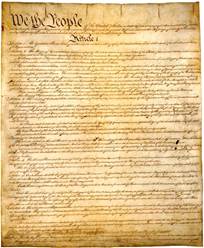
the Constitution, and a Lasting Legacy -Andrew
Jackson and Indian
Removal -Samuel
Slater and his mill -Francis
Cabot Lowell and his mill |
||
|
This module’s essay: While
the main difference between the North and the South was slavery there were
other differences as well, each important in the development of two different
regions. Using the readings and videos for the last three weeks, explain the
important differences, culturally, economically, and politically, between the
North and the South. Reminder: you must do either this
essay or the next module’s essay. |
||