|
Civil
War America |
|
|
The late Joel Silbey, a well-known historian of the Civil War era, wrote
prolifically on the period. One of his works, Storm Over Texas: The
Annexation Controversy and the Road to the Civil War, left an impression
on me (not surprising considering my dissertation work was in the Western
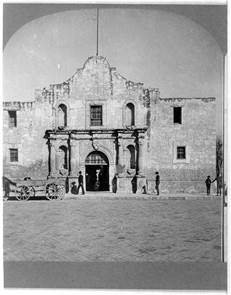
History field). He argued that Texas and the political struggle that ensued following
the Texas revolt against Mexico, was a major factor in the coming of the
Civil War (thus, his subtitle). Events in Texas happened just as an editor
began arguing that the United States was destined for greater things. There will be a
couple of readings for this mini-module. John L. O’Sullivan is generally considered
to be the person that best articulated the ideology that the United States
was exceptional and that its destiny was manifest: to overspread the entire
continent. As editor of The United States Magazine and the Democratic
Review, his influence was strong in the Democratic Party. His ideas,
however, took hold across political parties as Americans came to see
themselves as something apart from the rest of the community of nations.
Begin with the 1839 essay “The
Great Nation of Futurity.” Then read his 1845 essay “Annexation.” When you read these take
note of the evidence relevant to the period he is writing on, but also note
the larger themes he is developing. As he sums up, he sees America one
hundred years in the future a very distinct place. In To
Conquer or Redeem: Manifest Destiny, watch segments fourteen through
twenty-seven. Watch “The
Golden Land” from The West of the Imagination. From What
Hath God Wrought, by the Pulitzer Prize-winning historian Daniel Walker
Howe, this excerpt on manifest destiny. |
|