|
|
Module Two |
|
|
As you can see from the “table of contents” page, there are five modules, each lasting for three weeks. The dates for the module are delineated on that previous page. This is the second module and I will again explain the layout, repeated in the subsequent three module pages. First will be an announcement as to any special assignment for the particular module. Then the readings from the course texts are delineated. There will be videos to watch that can be accessed through the college’s library holdings. You may have to login using your Banner ID and password. Each video will be linked so you do not have to search for it (let me know if there are ANY issues). Related to your course texts will be a series of webpages, some you must read, that are connected to the modules topic(s). These are outside my control. I attempt to find government, museum, and university sites but if you have ANY problems, let me know. Last is the essay for each module. Review the announcement on essay exams for direction. |
||
|
Special assignment: this module is going to have a “mini-module” in it. You should plan on completing that work in the first week. For the rest of the module, you will have the entire three-week period. Caution: do not put your work off until the last minute (very easy to do, BUT NOT in your best interests). You will be assessed on the quality of your writing and the variety of assigned sources you use. |
||
|
Course textbook readings for Module One: From Gallagher/Waugh, The American War, read pages 12-23. Excerpts from Peter Kolchin, American Slavery Excerpts from David Reynolds. Waking Giant Henry David Thoreau, “Civil Disobedience” |
||
|
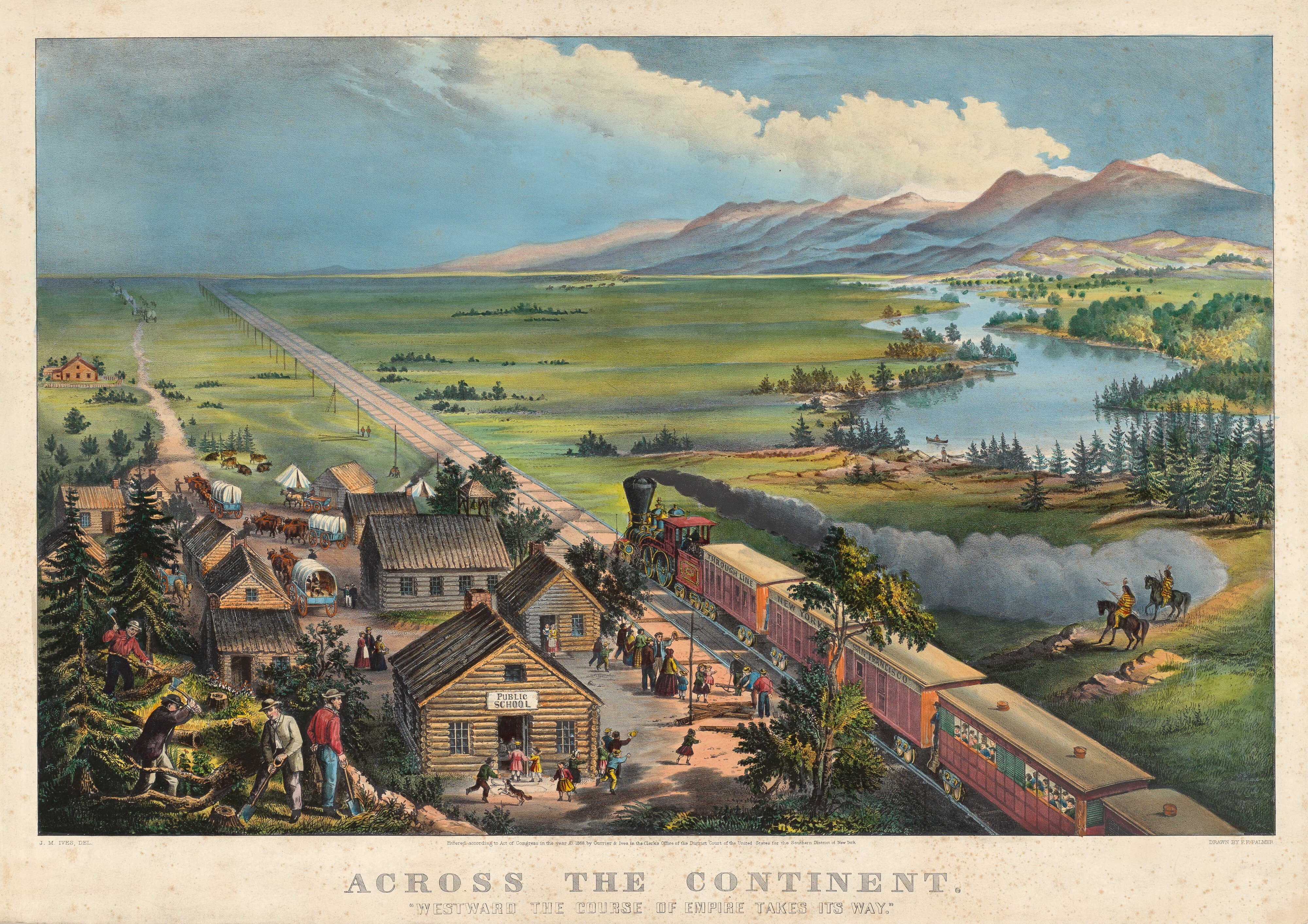
Videos for this first module: -From the PBS series The African Americans: Many Rivers to Cross: The Age of Slavery (1800-1860). -From the PBS series Slavery and the Making of America: “Seeds of Destruction.” As with the last module, there is some overlap between the first video and this one, but their overall focus is different: the former more global in its focus while the latter focuses in on the developing United States. -From the Growth of a Nation series, “Expansion and Reform.” -From American Passages: A Literary Survey, “Slavery and Freedom.” -From The Biography of America, watch “The Reform Impulse” -From The Common School: 1770-1890, watch segments five through eleven -Daniel Walker Howe lectures on “distance and technology” (click on the thumbnail above right to get a larger version of the print by Frances Flora Bond Palmer) |
||
|
Below are websites that have content connected to this module. They should be used as part of your discussion posts and essays. Use them to further your own learning or as a starting point for a possible research topic. -William Lloyd Garrison’s first editorial from The Liberator -Elizabeth Cady Stanton and the “Declaration of Sentiments” -As Ralph Waldo Emerson, a founder of transcendentalism, wrote on utopian communities, “We are al a little wild here with numberless projects . . .” -Connecticut had two utopian communities, one Shaker, the other Oneida. |
||
|
This module’s essay, you choose one of the two below: A. The philosophy of manifest destiny contributed to the mid-nineteenth-century expansionist drive in the United States. Explain that contribution and discuss the implications for individual Americans and the nation. B. As we saw in the last module, there was extensive change in the United States, which continued into this period. How did some Americans respond to that change? What role did religion have and what reforms were connected to it? How successful were those reforms and communities? Reminder: you must do this essay if you did not do the last module’s essay, or if you want to complete this requirement early and concentrate on your research paper. |
||